
If you haven’t already, read the Part 1 of the series for the previous FIRE Lessons.
FIRE Lesson 4 : The Fire Number Disappointment
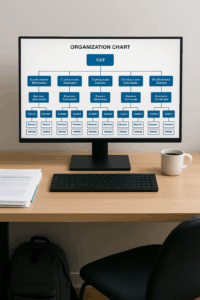 Around a couple years ago, I was working with a small, family-owned IT company. It was a place where we would regularly gather in the lunch room and discuss the weekend, amongst the coffee aromas of the automatic Jura coffee machine. But recently, the company had grown in such a way that the founders were finally looking at selling the company. The vibe had changed. Suddenly, all the employees now had KPIs and stretch goals and people started giving themselves fancy titles with “Head of” or “Vice President”. Everything revolved around where everyone was on the organisation chart. The mood had changed significantly from a small family company to one which was now obsessed with transparency.
I described previously the incident that broke the camel’s back, so I won’t go into that again. I quit the company and vowed to never be an employee again.
I wondered if I could retire, sitting in my Sydney apartment with the muffled hum of traffic outside; I opened up Excel and started slowly calculating my expenses. It was sobering.
Monthly expenses
| Expense | Cost |
|---|---|
| Rent | $5,400 |
| Entertainment | $350 |
| Groceries | $600 |
| Streaming Subscriptions | $50 |
| Home Internet | $90 |
| Mobile Phone | $40 |
| Electricity | $130 |
| Gas | $100 |
| Health Insurance | $150 |
| Travel | $500 |
| Coffee | $100 |
Total: $7,510
The number stared back at me. My FIRE number would be 2,253,000. The Trinity Study assumed a portfolio of stocks and bonds, both very liquid investments. If I’d counted only my liquid investments at that moment, I was close but I didn’t have enough.
If I did quit my job, and started withdrawing 4% from my investments annually, there was a risk that the investments wouldn’t sustain me through my retirement. Remember, the general 4% rule is that at the nominal withdrawal rate of 4%, this should sustain you for a 20 years retirement.
At the value of my investment portfolio, if I withdrew 4% every year, I would not have enough to pay my expenses. If I withdrew enough to pay my expenses and exceeded the 4%, I would not last 20 years.
It was the first time I realised that unless I made serious changes, I couldn’t retire yet.
Even though the numbers didn’t initially work, I was determined to make it work. I now had a FIRE number. I now knew where I stood. I knew I had to make some changes. The exercise had proven useful.
 FIRE Lesson
Even though you may not be able to retire, totalling up your expenses and calculating your FIRE number is not a pointless exercise. It may give clarity around how to approach your FIRE goals and see what future steps you can take.
I needed to drastically reduce my FIRE number by drastically reducing my expenses. Otherwise, I needed to drastically increase my liquid investments.
First thing first: I had to consider the major expense – the rent. At $1350 a week, this was obviously unsustainable. I had a huge courtyard on the top of my apartment with a view of Sydney’s iconic Centrepoint Tower. This was smack bang in the middle of Sydney. It had to go! Rents in Sydney CBD were going around the $1,000 mark while the cool places like Newtown, Erskineville were hardly better.
$1,000 a week contributes 1,300,000 to the FIRE Number.
If we could tweak this, it could totally reduce the FIRE number dramatically.
As I looked through the expenses, I realised I could dramatically reduce my expenses without incurring a huge hit to my lifestyle by moving to Thailand.
 That’s when the thought of Thailand struck. I’d been there before. I could almost smell the Pad Kaprao from the street food carts and feel the humid air wrap around me. In Thailand, a condo could be rented for $1,500 AUD a month while eating out would be only $5–6.
$1,500 a month contributes only 450,000 to the FIRE number. This is a great reduction.
Thailand is just an example. Romania itself also would be a lot cheaper but for an Australian, it is easier to get a visa for Thailand than an EU visa for countries such as Romania.
An estimated expense breakdown would be:
| Expense | Cost |
|---|---|
| Rent | $1,500 |
| Entertainment | $200 |
| Groceries | $150 |
| Streaming Subscriptions | $15 |
| Home Internet | $50 |
| Mobile Phone | $18 |
| Electricity | $70 |
| Gas | $6 |
| Health Insurance | $150 |
| Travel | $500 |
| Coffee | $50 |
= $2,709
My FIRE number would be 812,700, which is a huge reduction. Suddenly, freedom wasn’t a just a dream – it was staring me in the face.
My liquid investments cover this and more, meaning the 4% withdrawal would sustain me throughout my retirement and beyond, so long as we don’t allow the expenses to creep.
Leaving Australia for Thailand is a big move, but I look at it as gaining freedom to concentrate on my priorities. I look back at my previous work and am grateful I don’t ever need to return to office life.
The things I did to get to FIRE
- Started investments early
- Took out loans for investments
- Sought financial advice
- Was financially literate
- Was flexible
I am grateful that I started early, that I used other people’s money from an early age and I have enough financial literacy to maximise my investments.
With this plan, I never need to work ever again.
FIRE Lesson
A FIRE number is just a number. With some flexibility, this can be manipulated in different ways. By questioning the biggest expense in my life and being open to the idea of moving abroad, I took something that felt impossible and made it achievable.